This guide provides general education and does not diagnose a condition or replace individual medical or physiotherapy assessment.
Why the knee hurts after sport
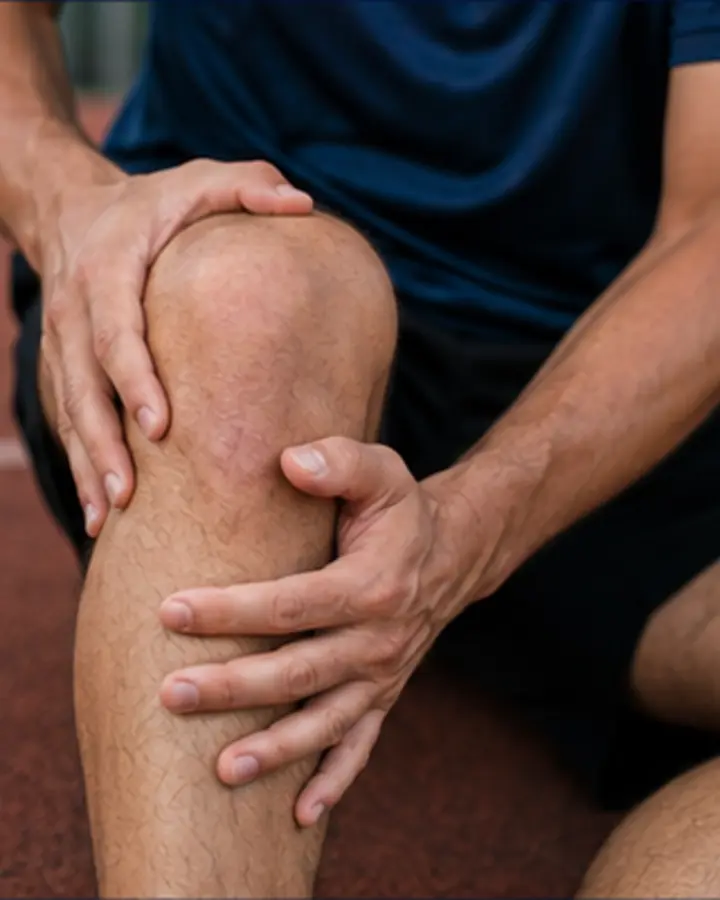
Knee pain can follow a clear twist, collision or awkward landing. It can also appear gradually when training volume, running distance, speed or strength demands increase faster than the body is ready for.
The location of pain, swelling, instability, locking, mechanism of injury and ability to bear weight all help guide the assessment.
Common sporting knee presentations
- ACL, PCL and collateral ligament injuries
- Meniscus injuries
- Patellofemoral pain
- Patellar or quadriceps tendon pain
- Muscle strains around the knee
- Joint or bone bruising
- Post-operative knee rehabilitation
The early phase
Immediately after injury, the priorities are to understand the likely severity, protect the knee when needed and maintain safe movement. Swelling, loss of extension, difficulty walking or a feeling that the knee gives way may change the treatment plan and whether medical review or imaging is appropriate.
Rehabilitation is more than strengthening
A complete program can include restoring knee movement, rebuilding quadriceps and hamstring strength, balance, landing control, running tolerance and sport-specific skills. Progression should reflect the demands of the person’s sport rather than stopping when everyday walking feels comfortable.
Returning to sport
Return to sport is a process, not a single clearance date. Running, changing direction, jumping and contact are introduced progressively. Strength and functional testing can help identify whether the knee is ready for the next stage and highlight areas that still require work.
Official links
Read the source for this topic.
Each link below opens the specific government or scheme page used for this guide.
Raby & Gledswood Hills